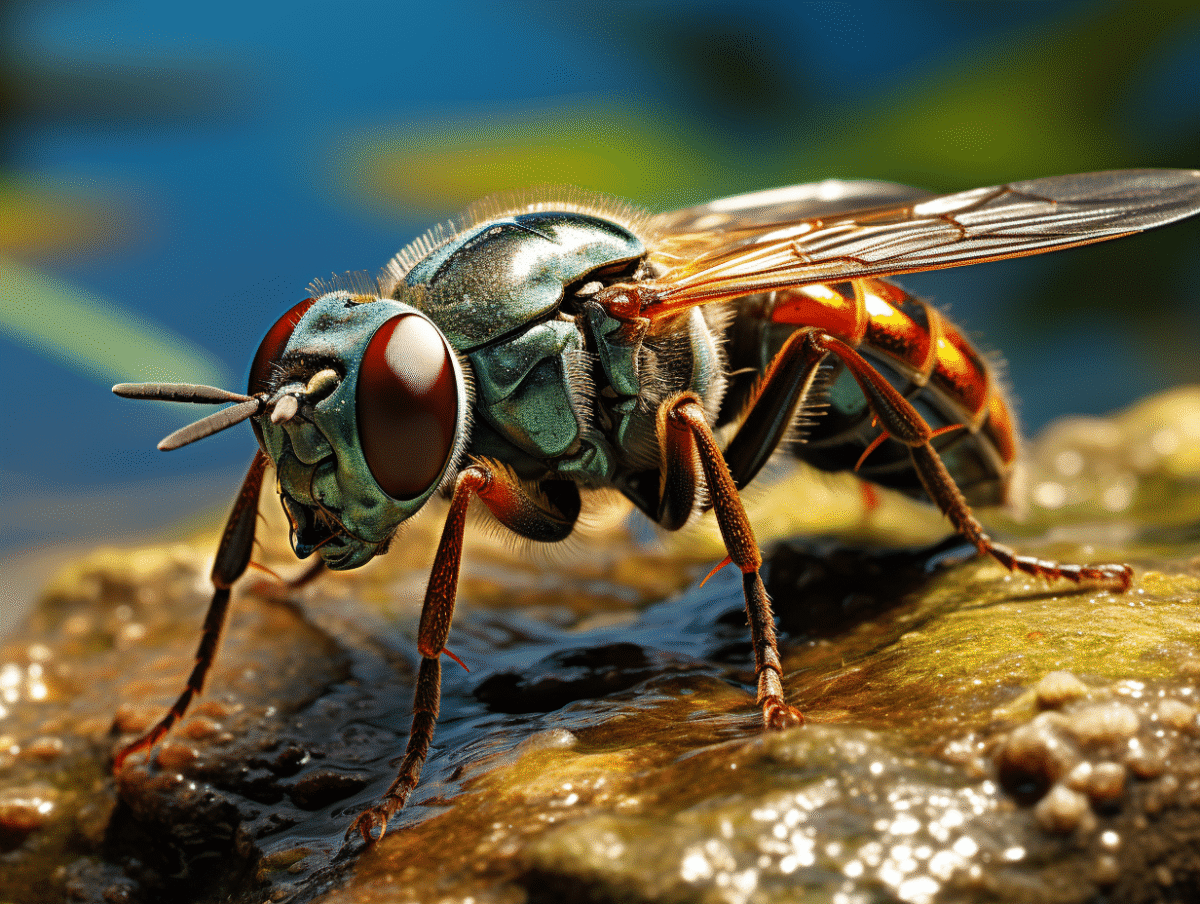
The metamorphosis of insects remains one of the most captivating natural phenomena, illustrating a radical transformation from the larval state to adulthood. The fly, often perceived as a mundane insect, offers a remarkable example of this complex biological process. Its life begins in the form of an egg, then evolves into a larva, more commonly known as a maggot. It is at the pupal stage that the most astonishing transition occurs, where the insect, encapsulated, reconfigures its anatomy. This phase culminates in the emergence of the winged adult, ready to embark on its aerial life cycle. This particular case of the fly reveals the evolutionary ingenuity of insects.
The Secrets of Insect Metamorphosis: A Multi-Step Process
Insects, these fascinating beings endowed with an exoskeleton and subject to molting, are distinguished by their ability to undergo metamorphosis. This metamorphic process is not uniform within the realm of hexapods. Two main types stand out: holometabolous metamorphosis and hemimetabolous metamorphosis. The former, concerning orders such as Lepidoptera and Diptera, involves a complete transformation passing through distinct larval stages and a pupal phase, often a dormant period called diapause. The latter, observed in Odonata or Orthoptera, is characterized by incomplete metamorphosis, without a marked pupal stage, where the young closely resemble adults, but are smaller.
The case of Diptera, and more specifically the fly, generates particular scientific interest. The question often arises: How long does it take for a maggot to become a fly? The life cycle of the housefly reveals a variable answer, specific to the species and influenced by environmental factors. From egg to adult, each stage is fundamental and must be successfully completed to ensure the survival of the species. The pupa represents a pivotal stage, a critical phase of profound transformation, during which the larva metamorphoses into an adult.
Researchers at the STRI (Smithsonian Tropical Research Institute) have conducted extensive studies on Heliconius butterflies, an example of holometabolous metamorphosis. These studies help illuminate the genetic and environmental mechanisms governing metamorphosis. Understanding these processes opens up perspectives in various fields, from evolutionary biology to ecology, not to mention potential applications in forensic science, where flies are used by forensic pathologists to estimate the time elapsed after death. The metamorphosis of insects, far from being a mere change in form, represents a window into the complexity of life and its relentless capacity for adaptation.
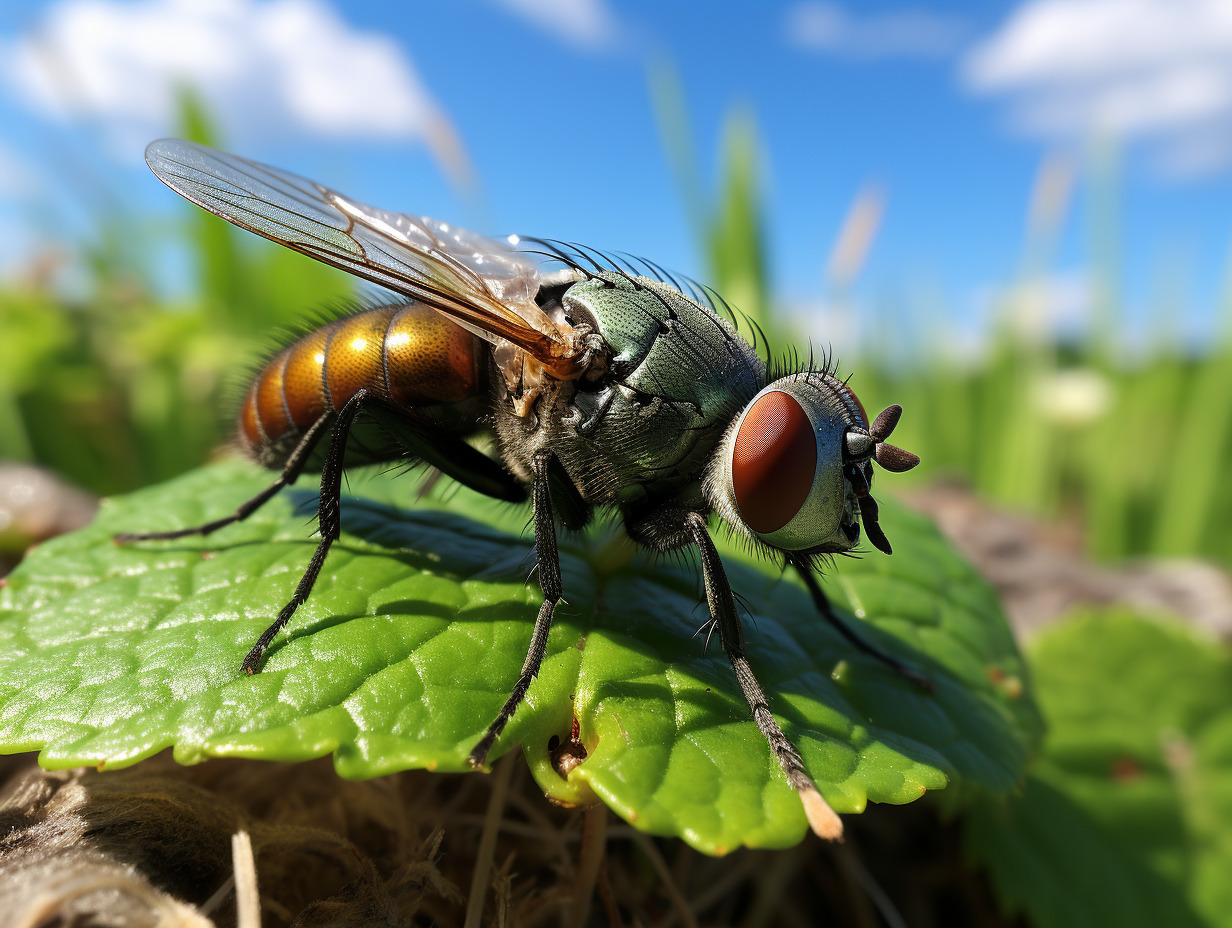
Focus on the Fly: From Egg to Adult, a Fascinating Life Cycle
The life cycle of the housefly is divided into four main stages: from egg to larva, from larva to pupa, and finally, from pupa to adult. Each stage of development is specific to the species and is part of a complex biological process. In the housefly, the egg metamorphoses into a mobile and voracious larva, which then enters a pupal phase, a period of silent and crucial transformation.
The Mediterranean fly, a related species, follows a similar pattern but with nuances that reflect its adaptation to a particular environment and lifestyle. Climatic conditions, food availability, and interactions with other species significantly influence the duration and effectiveness of each phase, thus determining the success of metamorphosis.
Forensic pathologists have developed expertise in using certain species of flies, notably green and blue flies, to establish the post-mortem timeline during criminal investigations. Studying the life cycles of these insects allows for accurate estimation of the time elapsed since death, thanks to a deep understanding of the durations of the different developmental phases.
The survival and reproduction of these dipterans are influenced by various factors, such as immune defenses and the ability to find a mate and reproduce. These factors, working together, determine not only the lifespan of a fly but also the vitality and sustainability of the population in a given ecosystem. It is a natural ballet where each element interacts with remarkable precision, demonstrating the extraordinary adaptability of insects.