In France, the number of anti-Semitic acts saw a 300% increase in 2023 according to figures from the Ministry of the Interior. However, the inclusion of the fight against anti-Semitism in European legislation is not subject to any consensus, revealing deep divergences among member states.
The transmission of Jewish heritage is currently facing unprecedented challenges, between associative mobilization and budgetary pressures on cultural institutions. While the recognition of the plurality of Jewish identities progresses, tensions persist around memory, visibility, and the political issues related to international current events.
Overview of contemporary Judaism: dynamics, diversity, and place in society
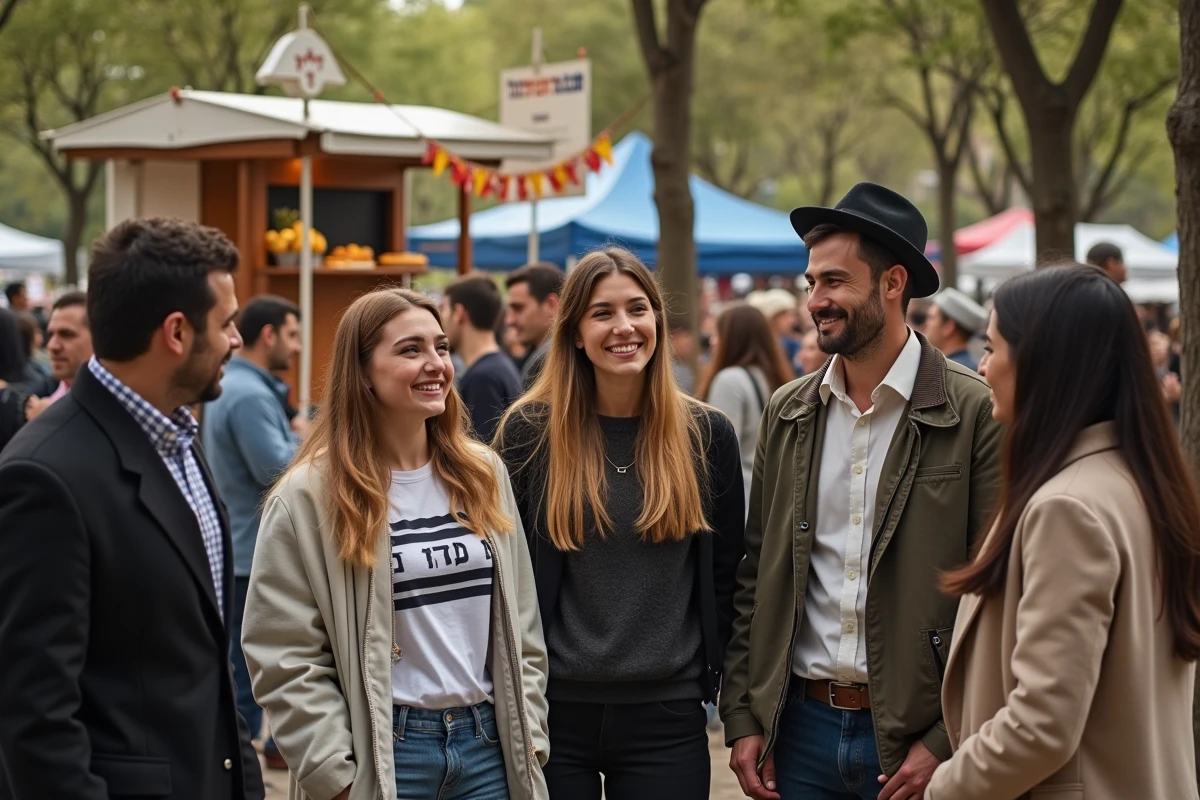
Behind the word “Judaism” lies a colorful mosaic today. It is impossible to reduce contemporary Judaism to a simplistic image: in France, the Jewish community, the largest in Europe, reinvents itself with each generation. Paris, Marseille, Strasbourg, Lyon… everywhere, young people are pushing boundaries, multiplying cultural projects and associative commitments. Jewish students, very active in university life, set the pace on social or societal themes.
This abundance does not erase internal diversity. Ashkenazi, Sephardic, Mizrahi heritages, each story finds its place without erasing the collective memory. Debates traverse both the question of religion and those of secularism or assimilation. The connection with Israel, very present among the younger generation, still shapes part of the discussions. As for heritage, it is back in the spotlight: restoration of synagogues, preservation of urban traces, each initiative tells a part of the Jewish presence in France.
Jewish life relies on a dense network: schools, specialized media, social science researchers, each contributes its part. To go further, consult the JD Mag website, which gives voice to experts, publishes analyses and portraits, and explores the place of Jews in French society and internationally.
Anti-Semitism today: what forms, what responses to the resurgence of hateful acts?
The resurgence of anti-Semitic acts in France raises alarm and mobilizes, with official figures to support it. Graffiti, verbal or physical assaults, desecration of places of worship or graves: anti-Semitism manifests itself in all its forms, from insidious harassment to frontal attacks. Social media, unfiltered spaces of expression, too often serve as a sounding board for these toxic discourses. Jewish students, especially during university mobilizations, bear the brunt all too frequently.
The National Consultative Commission on Human Rights analyzes these developments and highlights how racism, anti-Semitism, and hatred of minorities intersect. Action on the ground takes multiple forms. There are interventions in schools, training for police and gendarmes, campaigns to raise public awareness. The Union of Jewish Students of France supports victims and speaks out against the normalization of these acts. Certain figures, like Ilan Halimi, remain anchored in collective memory, powerfully reminding us that vigilance must never wane.
On the judicial front, the response is being organized. Filing complaints, increased protection of places of worship, citizen mobilization: every reaction counts. This was seen during gatherings in front of the Copernic synagogue, a symbol of a society that refuses to yield to hatred. Staying alert, refusing resignation, is the true challenge.
Preserving Jewish heritage: issues of memory, transmission, and vigilance for the future
Preserving Jewish heritage is not just a duty of memory: it is an urgency given the fragility of traces and the threat of forgetting. The Holocaust continues to mark every preservation project, every transmission initiative. Everywhere, memorials, archives, traveling exhibitions remind us of the necessity to keep individual and collective stories alive. The Camp des Milles, supported by the Foundation of the same name, stands out as a place of transit, deportation, but also of active pedagogy for younger generations.
Vigilance is exercised close to the ground. Synagogues, cemeteries, rare manuscripts: each vestige is subject to careful monitoring. Recent restorations, supported by local authorities, rely on social sciences to document and restore the depth of the past. A legal framework supports these actions, guaranteeing access, preservation, and transmission of these essential markers.
Transmitting memory, fostering vigilance
To illustrate this patient work, here are some examples of concrete actions implemented each year:
- Organization of awareness and training sessions in schools, colleges, and high schools, to convey this history and its lessons.
- Production of videos and their dissemination to subscribers and the public, to better illuminate contemporary issues related to memory.
Collective memory cannot be decreed. It is embodied through encounters, testimonies from victims of anti-Semitic acts, and debates on public policies. The actors in the preservation of heritage, researchers, educators, associations, multiply initiatives to ensure that vigilance never wanes and that the future is not amputated of its markers.
Nothing is ever predetermined. Society is built on this tension between memory and forgetting, vigilance and indifference. It is here, in this daily movement, that the place of the Jewish world is played out, and, more broadly, our capacity to defend what binds us.