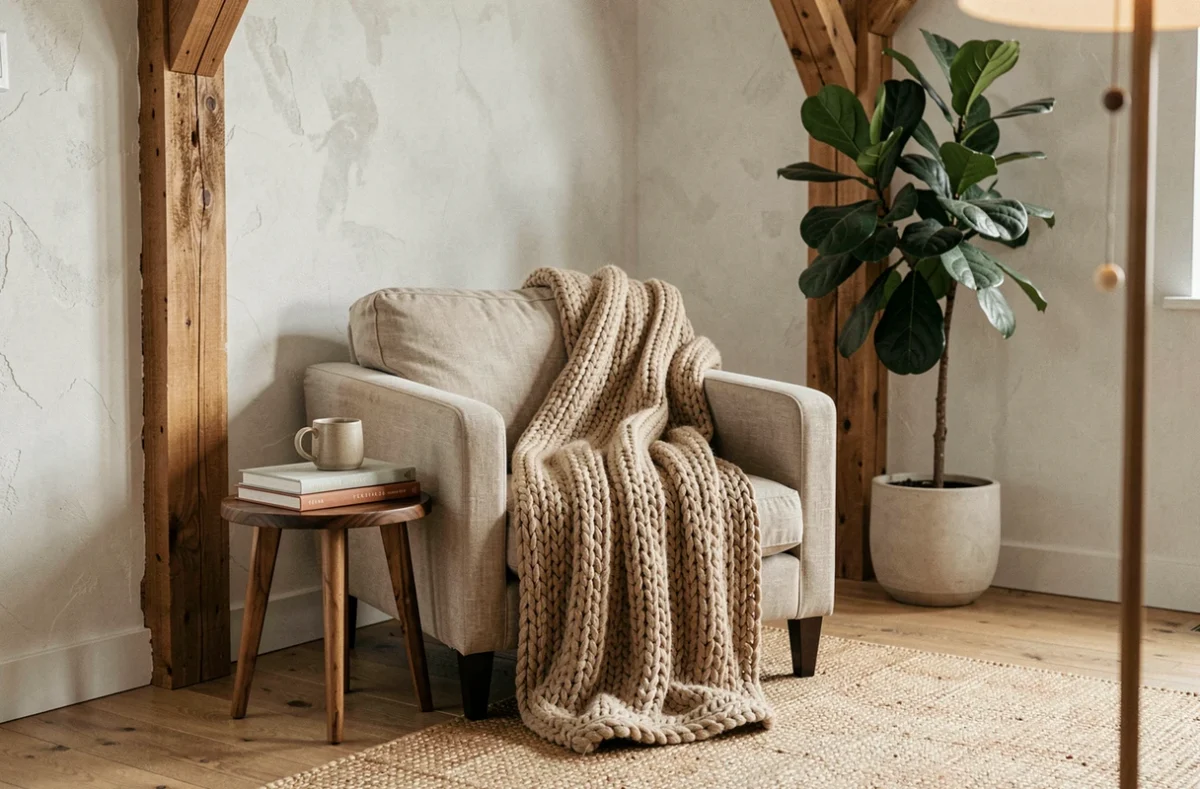
Creating a comfortable home means working on two distinct fronts: visual appeal and genuine physical comfort. An interior can feel warm thanks to its textiles and colors, yet still be unpleasant to live in if the air is damp or stale, or if temperatures become uncomfortably high in summer.
ADEME recommends limiting the amount of sunlight entering through windows, airing rooms during the cooler hours, and protecting sun-exposed rooms—all measures that affect comfort long before you choose a cushion or light fixture.
Thermal comfort and ventilation: what no amount of decorating can fix
Before choosing wall colors or wool throws, take an honest look at your home’s building envelope. A persistent draft under a patio door, a room that becomes stiflingly hot as early as June, or recurring condensation on the windows are signs of problems that decorating can conceal but not solve.
ADEME advises against blocking air inlets and exhaust vents. Heavy curtains hung in front of a ventilation grille may create a cozy feel, but they compromise indoor air quality. Textiles and furniture are no substitute for proper ventilation.
In France, the energy-efficiency standards for rental properties have reached a new milestone: since January 1, 2025, homes rated G on the DPE energy performance certificate no longer meet the required threshold for new leases, renewals, or extensions. Resources such as https://maisonconfort.net/ help bring together interior design and building performance considerations, because a home’s comfort depends as much on its walls as on what hangs on them.
Check that windows are airtight, make sure the attic insulation is adequate, and inspect the ventilation system: these steps should come before any home improvement project. A carefully decorated living room in a poorly insulated home is still a room that feels cold in winter and too hot in summer.

Creating a cozy living room without overheating the space
The living room gets most of the attention when it comes to decorating. Competitors talk at length about warm colors, candles, and cushions. These elements help set the mood, but the key to thermal comfort in a living room is managing natural light.
Solar shading and window orientation
A south-facing picture window can turn a living room into a greenhouse as early as spring. Limiting the amount of sunlight entering through windows means using exterior blinds, adjustable-louver shutters, or solar-control film. Interior curtains filter the light, but let heat in once the sun’s rays have passed through the glass.
In winter, the approach is reversed: let the sun in during the day and close the shutters at dusk to reduce heat loss. This simple habit makes a bigger difference to how comfortable a room feels than a fresh coat of paint.
Furniture placement and airflow
A sofa pushed against a poorly insulated exterior wall can leave your back feeling cold, even with a throw. Moving seating away from cold walls and keeping radiators or air vents clear helps distribute heat more evenly throughout the room.
- Don’t place a large piece of furniture in front of a radiator or convector heater: heat gets trapped behind it, and the room takes longer to reach a comfortable temperature.
- Leave a few centimeters between the back of a sofa and an exterior wall, especially in older homes without internal wall insulation.
- Position armchairs and reading areas near sources of natural light to reduce the need for artificial lighting during the day, which also limits unnecessary heat in summer.
Materials and textiles: balancing style with humidity regulation
Choosing materials for your home isn’t just a matter of style. Some materials naturally regulate humidity, while others make the problem worse.
Solid wood, terracotta, and traditional plaster absorb and release moisture from the air. These materials act as humidity buffers, helping create a level of comfort that plastic finishes and laminate flooring can’t provide. Vinyl flooring in a poorly ventilated room encourages condensation on the floor, whereas solid wood flooring or terracotta tiles allow moisture levels to balance out.
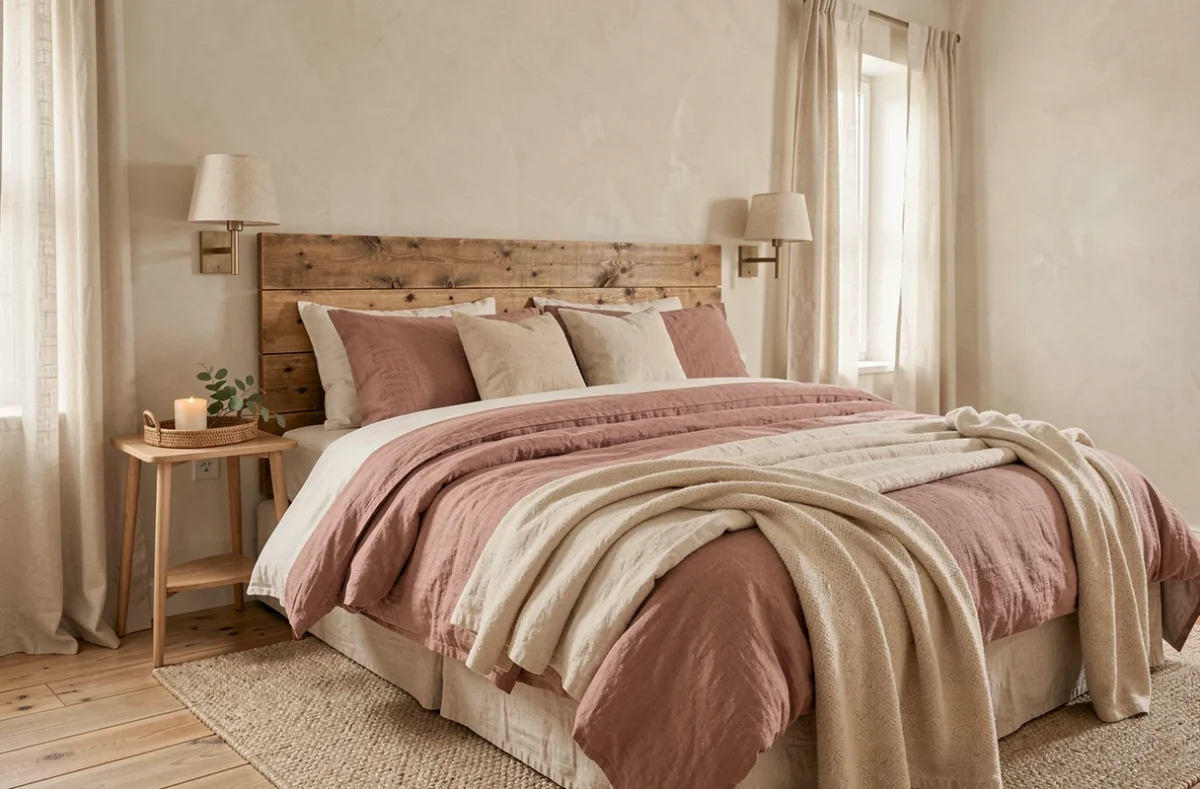
When it comes to textiles, linen and wool have thermoregulating properties: they insulate in winter and remain breathable in summer. Polyester is less expensive, but traps body heat and can feel clammy in poorly ventilated rooms.
Lighting and a cozy atmosphere: a few choices that change how a space feels
Lighting changes the way an interior feels faster than almost any other update. Two simple principles are enough to transform a room’s atmosphere.
Use several low-level light sources instead of a single ceiling fixture. A central ceiling light casts flat lighting that makes a room feel less dimensional. Two or three lamps placed at seating height (a table lamp, reading lamp, or low wall light) create areas of light and shadow that add depth to the room.
Choose bulbs with a color temperature of around 2,700 kelvins for living spaces. You’ll find this information on the packaging. Above 4,000 kelvins, the light takes on a cool white tone and creates a clinical atmosphere, even in a carefully furnished living room.
- In the bedroom, a single warm, indirect light source (a wall light aimed at the ceiling or a bedside lamp with an opaque shade) is enough to create a restful space.
- In the kitchen and over the worktop, neutral light (3,000 to 3,500 kelvins) is better suited to comfortable food preparation without straining your eyes.
- In hallways and entryways, soft lighting with a motion sensor avoids a sudden burst of brightness when you come home, especially in the evening.
Creating a warm, inviting interior starts with fixing the invisible problems (ventilation, insulation, and solar control), then choosing materials and lighting. A healthy home is the foundation of a comfortable one. Decorative choices come afterward, enhancing a living space that works rather than compensating for one that doesn’t.