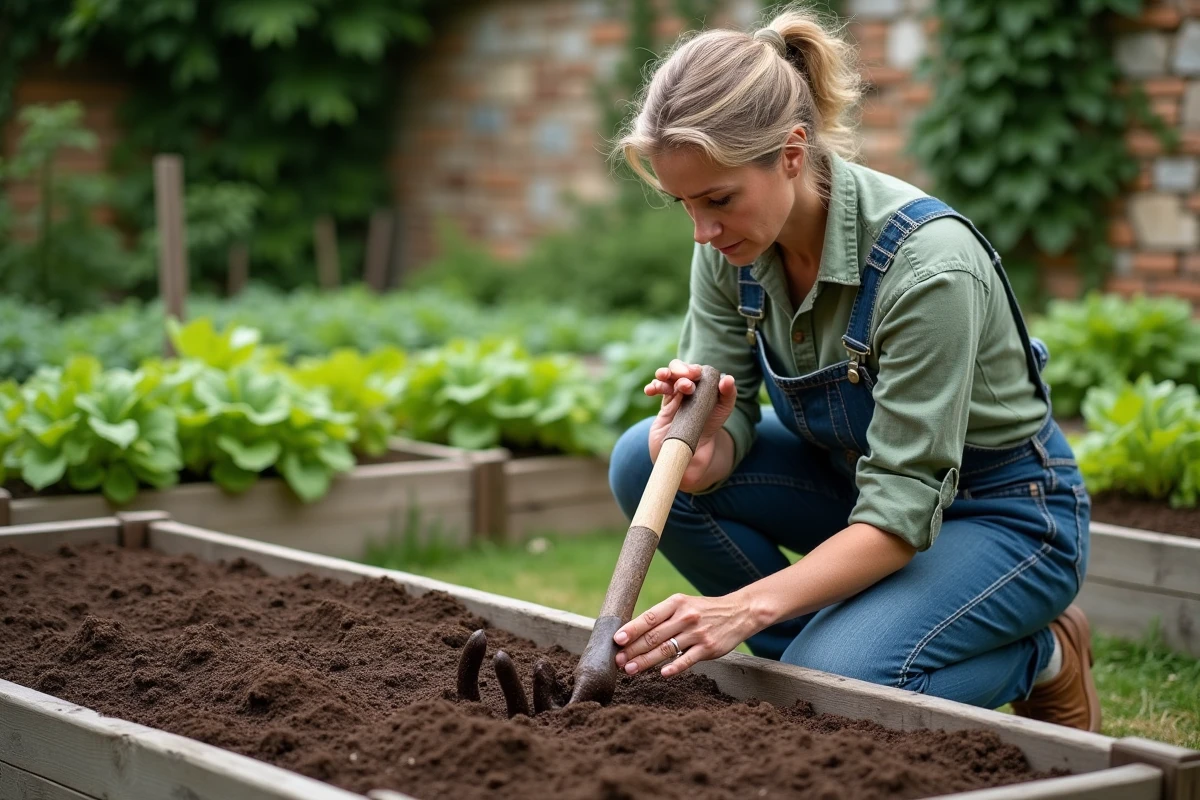
Between the spade that turns the layers of soil and the tiller that consumes fuel, the grelinette holds a special place in the organic vegetable garden. This tool, invented by André Grelin, aerates the soil without disturbing its structure.
Its actual effectiveness depends on parameters that most gardening guides do not detail: soil type, duration of use over time, working posture. Measuring these parameters allows one to understand when the grelinette saves time, and when it is no longer necessary.
Grelinette and tiller: comparison of impacts on soil and cost
The comparison between the grelinette and the tiller is not limited to the opposition of “manual versus motorized.” Several concrete criteria separate the two tools, from respecting soil life to annual operating costs.
| Criterion | Grelinette | Tiller |
|---|---|---|
| Action on soil | Aeration without turning, layers preserved | Turning and mixing of horizons |
| Microbial life | Fauna and microorganisms kept in place | Marked disturbance of fungal networks |
| Operating cost | No fuel, minimal maintenance | Gasoline or electricity, regular mechanical maintenance |
| Suitable surface | Small and medium plots | Large areas or very compacted soils |
| Noise and emissions | Silent, zero emissions | Noticeable noise, emissions if thermal |
Since the rise in energy prices in 2022, shared garden networks (Brest, Strasbourg) and several AMAPs have reported an increasing adoption of the grelinette as a low-energy alternative to the tiller. The motivation is not solely ecological: it is also economic, especially for small organic farms looking to reduce their fixed costs.
Soil life specialists also note that the repeated use of the tiller creates a plow pan beneath the worked surface. The grelinette, by pushing its tines in without turning, does not have this effect. For a modest-sized organic vegetable garden, the operational data covers on grelinette-warrior.com all models suitable for each terrain configuration.
When the grelinette becomes unnecessary: thresholds of living soil
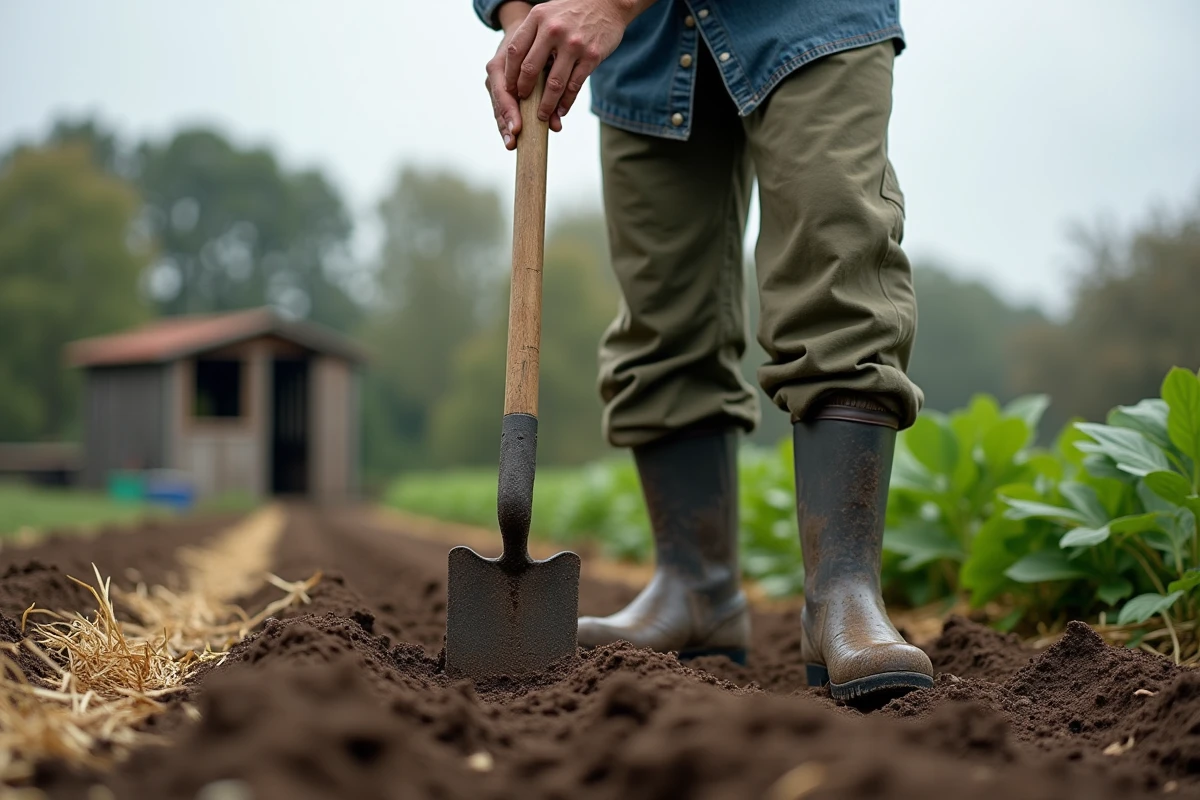
A point rarely addressed: the grelinette is not intended to be used indefinitely. Observations conducted in micro-farms practicing market gardening on living soil (MSV), notably at the farm of Bec Hellouin, show that the use of this tool is gradually reduced, or even abandoned, after three to five years of permanent soil cover.
The reason is measurable. Soil penetration tests conducted on these farms indicate that the soil fauna (anecic earthworms, deep roots) ensures sufficient decompaction on its own. The grelinette remains useful in two specific cases:
- At the startup phase of a vegetable garden, when the soil has never been cultivated organically and shows significant compaction
- When re-cultivating a plot left fallow or compacted by machinery
- On heavy clay soil that has not yet developed a diverse root network
On the other hand, a soil covered permanently with mulch or green manures for several seasons often does not require any mechanical work. The grelinette is a transitional tool, not a permanent one.
Posture and ergonomics: what training centers have been teaching since 2021
The grelinette is often presented as a tool that preserves the back. This claim deserves nuance. Ergonomists in occupational health warn about the intensive use of this tool among organic farmers: if misused, it increases musculoskeletal disorders in the shoulders and lower back.
Since 2021-2022, agricultural training centers such as the CFPPA of Florac and the CFPPA of Montmorot have integrated a specific module “gestures and postures with the grelinette” into their curricula. The most common mistakes are identified:
- Inappropriate handle height: handles that are too short force bending, negating the ergonomic advantage
- Too wide lever: pulling the handles too far back excessively stresses the lower back
- Soil too dry or too stony: forcing the tines into unsuitable soil multiplies joint stress
The correct action involves pushing the tines in using body weight (by pressing with the foot), then tilting the handles back with a short movement, without trying to lift the soil. The soil should simply crack and aerate.
Choosing a grelinette suitable for your organic vegetable garden
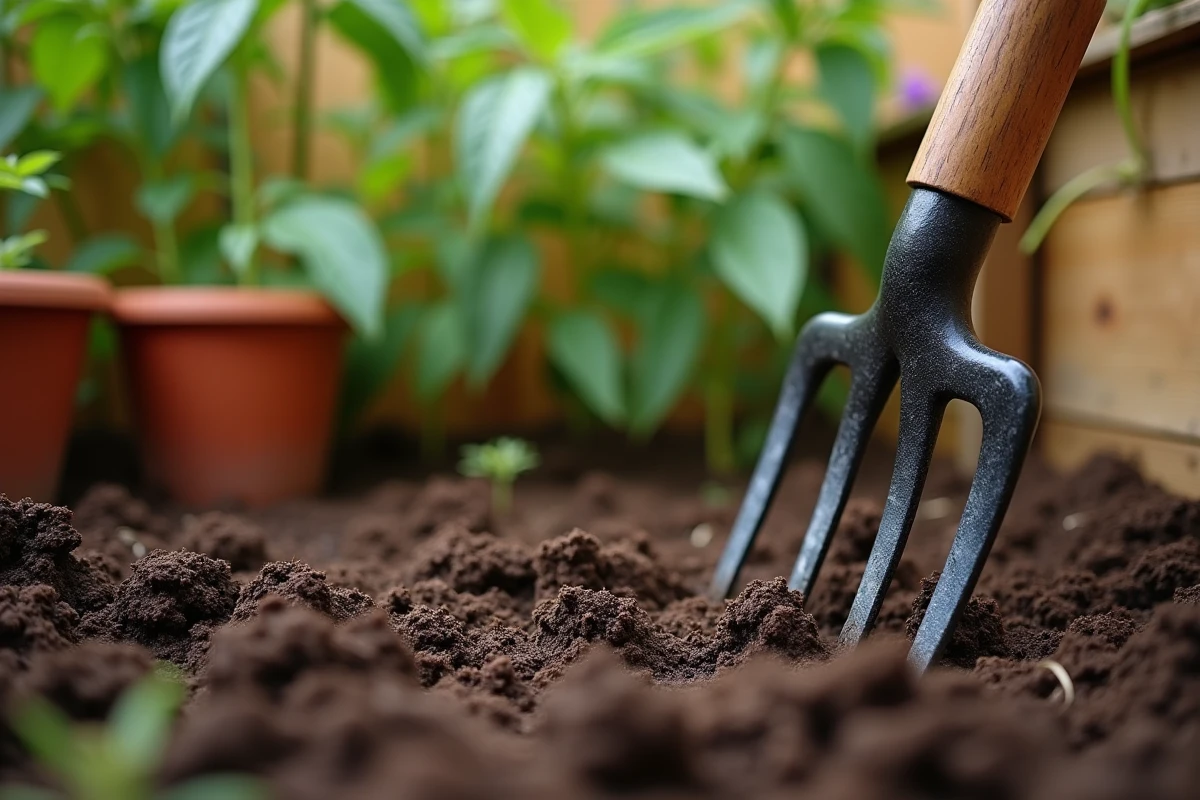
The number of tines determines the working width and the effort required. A three-tine model is suitable for heavy soils and small plots. A five-tine model covers more area but requires soil that is already relatively loose to be effective without forcing.
The quality of the steel used for the tines affects the lifespan. Tines made of hardened steel resist better in stony soils. Hardwood handles (ash, beech) absorb vibrations better than metal or composite handles, which is important during prolonged sessions.
For an organic vegetable garden in permaculture, the choice is also made based on medium-term strategy. If the soil is covered and mulched permanently, a lightweight model with three or four tines is sufficient for occasional interventions. A farmer starting on a compacted plot will need a more robust model, with longer tines and taller handles.
The grelinette remains one of the few gardening tools whose ultimate goal is to no longer need it. A living soil, rich in organic matter and protected by permanent cover, eventually structures itself. Choosing the right grelinette also means anticipating the moment it will return to the back of the garden shed.