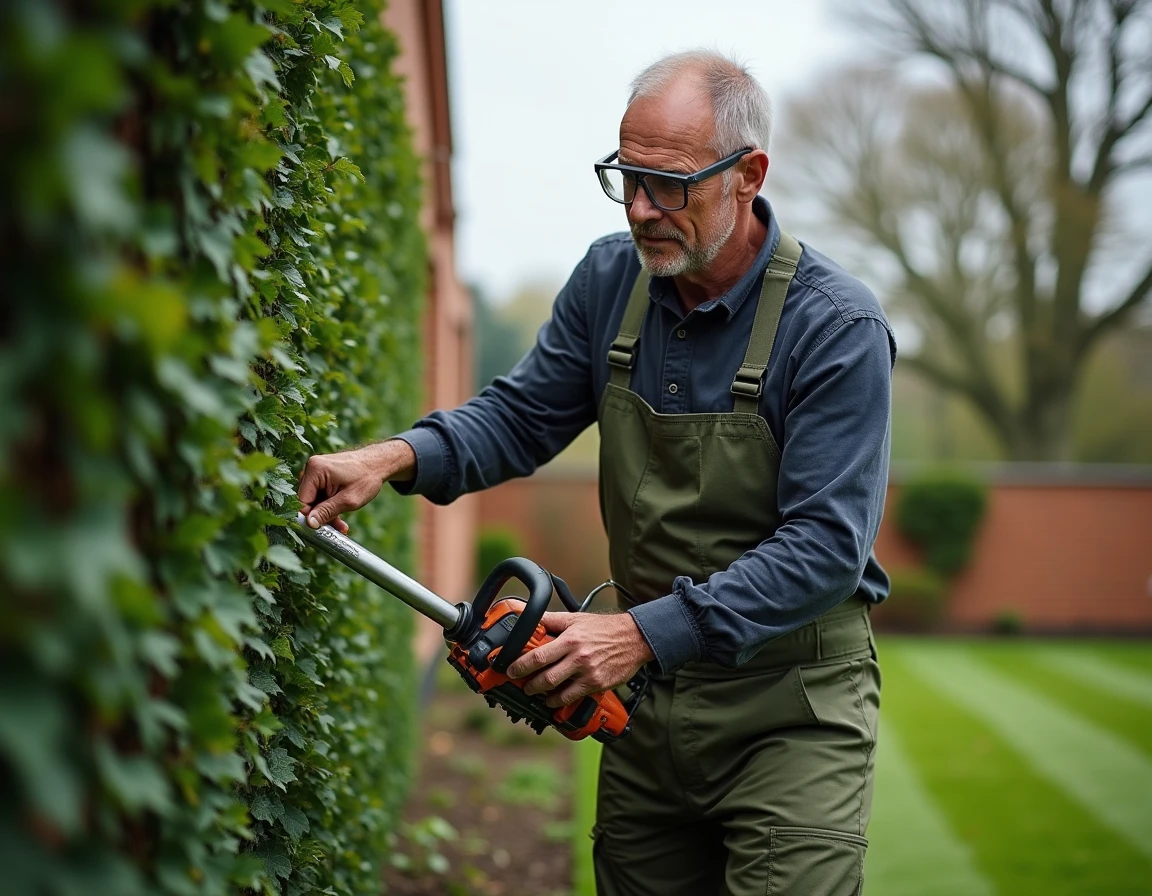
The telescopic hedge trimmer occupies a unique place in gardening tools. Designed to reach the tops of tall hedges and difficult-to-access areas without a ladder, it combines an extendable pole and an adjustable cutting head. Choosing an appropriate model depends on specific technical criteria, and its use at height imposes safety constraints that manufacturers increasingly integrate into the very design of the tool.
Adjustable cutting head and anti-rebound stop: what distinguishes a reliable telescopic model
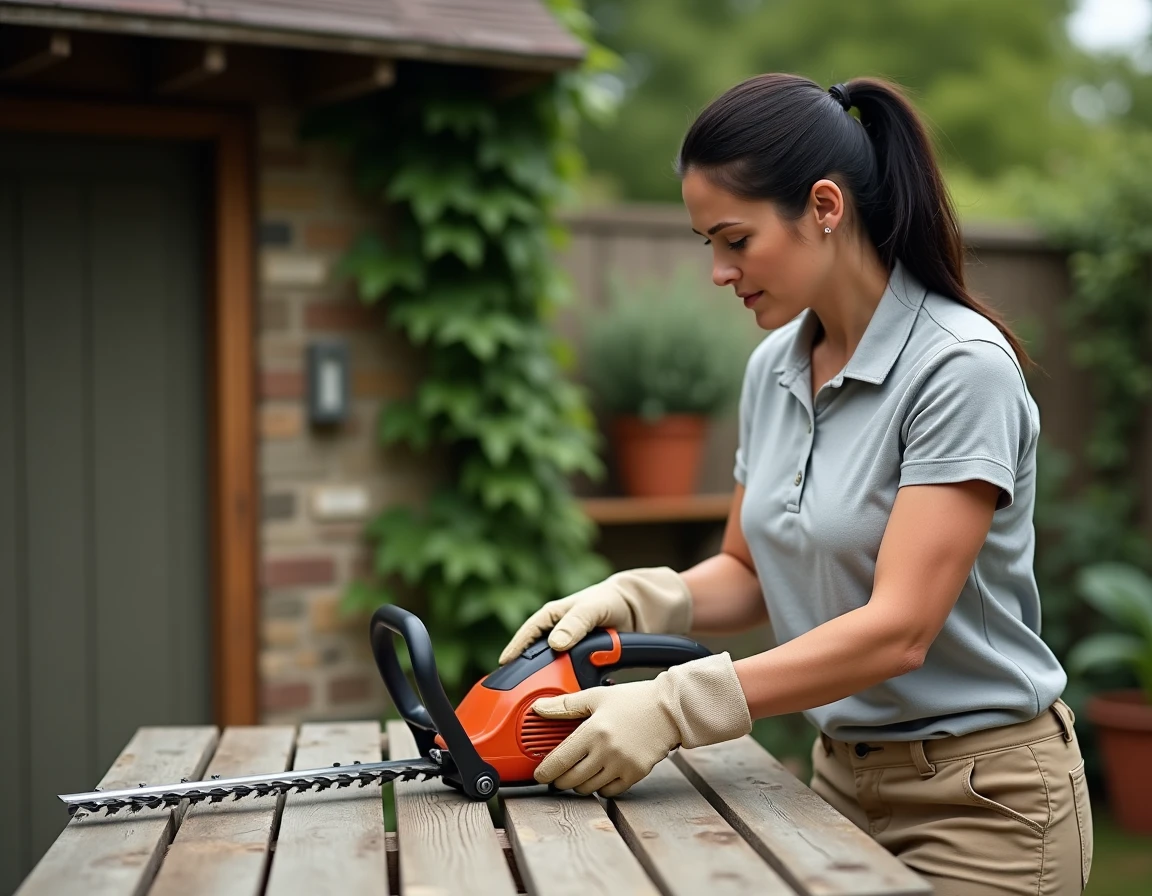
The most decisive technical point on a telescopic hedge trimmer is not the length of the pole, but the quality of the cutting head. Since 2022, several ranges have incorporated adjustable heads with more than seven positions featuring anti-rebound end stops. This device limits shocks at the blade tip when the tool comes into contact with a wall or post, a common risk when working at height.
The ability to lock the head at different angles allows for trimming the top of a tall hedge without tilting the body. An imprecise lock or a head that wobbles under motor vibration makes the work tiring and the result uneven. On entry-level models, the head often limits itself to three or four positions, which forces compensatory awkward postures.
The technical data sheets available on taille-haie-telescopique.com allow for comparing these mechanical features between models before making a purchase.
Interchangeable battery or electric cord: actual autonomy in telescopic work
The question of power supply is approached differently for a telescopic model than for a traditional hedge trimmer. The weight of the battery, positioned at the end of the pole or at the opposite end depending on the models, alters the overall balance. A poorly balanced tool becomes exhausting after just a few minutes with arms raised.
Recent battery models are part of 18 V or 36 V multi-tool platforms compatible with other devices (pole saw, string trimmer). This interchangeability reduces the overall cost of equipment for a gardener who already owns a tool from the same brand. However, the actual autonomy in telescopic mode is often lower than advertised, as working at height puts more strain on the motor and the user makes slower passes.
The corded model remains relevant for small gardens where an extension cord suffices. It offers constant power and reduced weight. However, the constraint of the cord becomes a real safety issue when handling a several-meter-long pole while moving along a hedge.
Gas-powered pole: an increasingly uncommon use
Telescopic hedge trimmers with gas engines exist, but their heavy weight and vibrations transmitted along the entire length of the pole reserve them for intensive professional use. For an individual, the weight-comfort ratio clearly favors battery models. Noise constraints also add to the picture, especially in urban areas.
Noise regulation and trimming hours in urban areas
The European directive 2000/14/CE regulates the noise emissions of equipment used outdoors. Several manufacturers have developed ranges specifically optimized to remain below the strictest thresholds. This is not a trivial marketing argument: many French municipalities enforce regulations limiting the hours of use for motorized gardening tools, sometimes to just a few hours on weekends.
A battery-powered telescopic hedge trimmer generally produces a noise level well below that of a gas model. For a user in a housing estate or condominium, checking the declared noise level of the model avoids neighborhood conflicts. Feedback from the field varies on this point: some models with a low noise level become significantly louder once the blade engages in dense foliage.
Blade length and tooth spacing: adapting the tool to the type of hedge
The length of the blade determines the width of the cut in one pass. On a telescopic model, shorter blades (around 40 to 50 cm) offer better maneuverability at height. Longer blades speed up work on linear hedges but add weight to the end of the pole and reduce precision.
The spacing between the teeth determines the maximum diameter of branches that the tool can cut. For a regularly trimmed hedge of thuja or laurel, moderate spacing is sufficient. For country hedges with harder wood and thick branches, wider spacing and greater motor power are required.
- Hedge of evergreens (thuja, laurel, privet) trimmed two to three times a year: short blade, standard spacing, sufficient battery
- Mixed or country hedge with woody branches: medium blade, wide spacing, powerful or gas motor
- High decorative hedge (hornbeam, beech) requiring a flat top: adjustable head with multiple positions, short blade for precision
Posture and safety: using a telescopic model without injury
Working with arms raised using a motorized tool at the end of a pole completely changes the risks compared to a traditional hedge trimmer. The projection of debris comes from above, necessitating the use of protective goggles and a hard hat or helmet. Anti-vibration gloves reduce fatigue in the hands and forearms during long sessions.
- Protective glasses or visor against falling debris
- Anti-vibration gloves suitable for prolonged work at height
- Closed shoes with non-slip soles (the ground under the hedge is often wet and cluttered)
- Fitted clothing to avoid any snagging with the moving blade
Never use a telescopic hedge trimmer on a ladder. The pole is designed to avoid climbing. Adding height with an unstable support multiplies the risk of falling with a working tool. If the hedge exceeds the maximum reach of the pole, prior pruning by a professional is preferable.
The telescopic hedge trimmer remains a specialized tool. It does not replace a traditional model for low hedges or lateral finishes, where a shorter and lighter device will always be more effective. The ideal for a garden with varied hedges is to have both types of tools, prioritizing a common battery platform to limit investment.