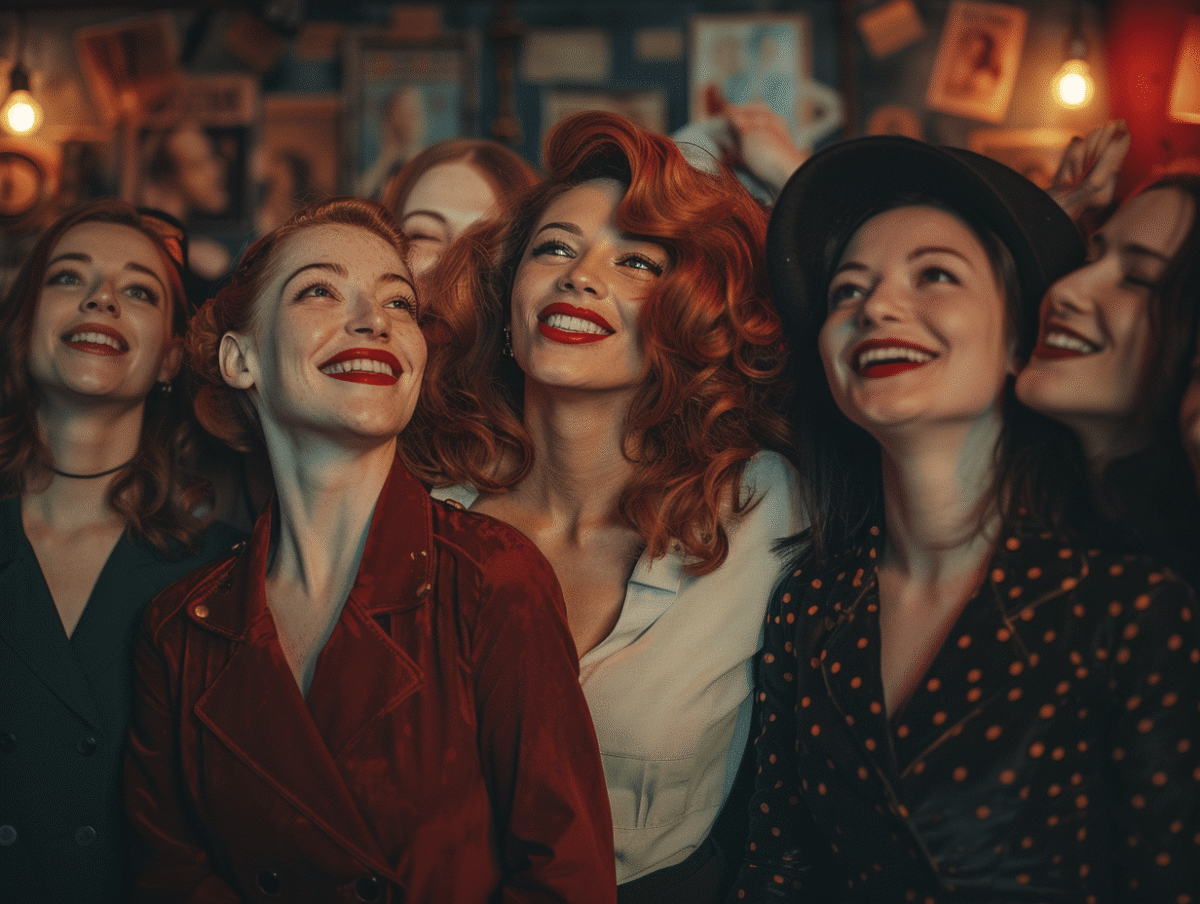
Within the humorous landscape of the United Kingdom, a mosaic of female talents has emerged, redefining the contours of comedy. These influential women, with sharp minds and undeniable talent, have boldly and originally shattered glass ceilings. They have not only enriched the genre with new perspectives but have also paved the way for future generations. From stand-up scenes to television shows, films, and plays, their creative contributions are inseparable from the evolution of British comedy, shaping a rich and diverse legacy.
The Pioneers of British Humor
The history of British comedy is inseparable from the contributions of influential women who, over the centuries, have left their mark on this aspect of culture. While their humor was not always overt, their wit, irony, and boldness paved the way for comedy as we know it. Jane Austen, for example, with her major work Pride and Prejudice, offered a remarkably fine social satire, mocking the conventions of her time with undeniable literary elegance.
In the 19th century, figures such as Florence Nightingale embodied a form of comedy through the absurdity of the human condition. As the founder of modern nursing, her scientific approach and sharp observations on public health provided a new perspective, often tinged with biting irony towards the institutions of her time. Emmeline Pankhurst, for her part, not only campaigned for women’s rights; she used wit and repartee in her struggle, making her speeches memorable and influential.
The 20th century saw the emergence of Rosalind Franklin, a scientist whose work on the structure of DNA was a silent revolution. Her story, often overshadowed by that of her male counterparts, is marked by a struggle against stereotypes, a form of resistance that, in hindsight, depicts a human comedy with multiple acts. Margaret Thatcher, dubbed the Iron Lady, demonstrated a certain form of theatricality in her governance style and public interactions, often interpreted as comedic performance by her detractors.
In this picture, it is important to mention Sunetra Sastry, less known than her illustrious predecessors, but whose presence in the world of British comedy, as a behind-the-scenes figure, enriches the collective narrative of these women who, in their own way, shaped a certain idea of comedy. This legacy, often overlooked, deserves recognition and study to fully understand the influence of these women on the British humorous landscape.
The Contemporary Impact of Women in British Comedy
The landscape of contemporary British comedy cannot be understood without acknowledging the substantial contribution of women who, like their pioneers, continue to blaze trails in humor and wit. On the occasion of International Women’s Day, celebrated every March 8, the reflection extends beyond borders to encompass gender equality, a struggle championed by figures such as Clara Zetkin, whose initiative gave rise to this day of mobilization.
In the realm of media and entertainment, personalities like Oprah Winfrey have transformed the audiovisual landscape with their brilliance and ability to reach a wide audience. Their influence, akin to that of the iconic figure of the civil rights movement in the United States, Rosa Parks, has transcended barriers to inspire generations of women to speak out with boldness and intelligence.
British comedy, enriched by this multicultural heritage, sees the emergence of female voices that, through their talent and insight, stand as role models for young comedians. They are participating in the redefinition of humor’s canons while contributing to a more balanced representation of the sexes in the industry. The female presence in positions of power, such as Mary Teresa Barra as CEO, also resonates in the world of comedy, where women are gradually taking the reins of production and creation.
The rise of political figures like Kamala Harris, the first female Vice President of the United States, and Jacinda Ardern, the re-elected Prime Minister of New Zealand for her leadership during crises, reflects the breakthrough of women in traditionally male-dominated spheres. This dynamic is mirrored in British comedy, where women are asserting themselves not only as creative forces but also as agents of change and cultural and social influence.