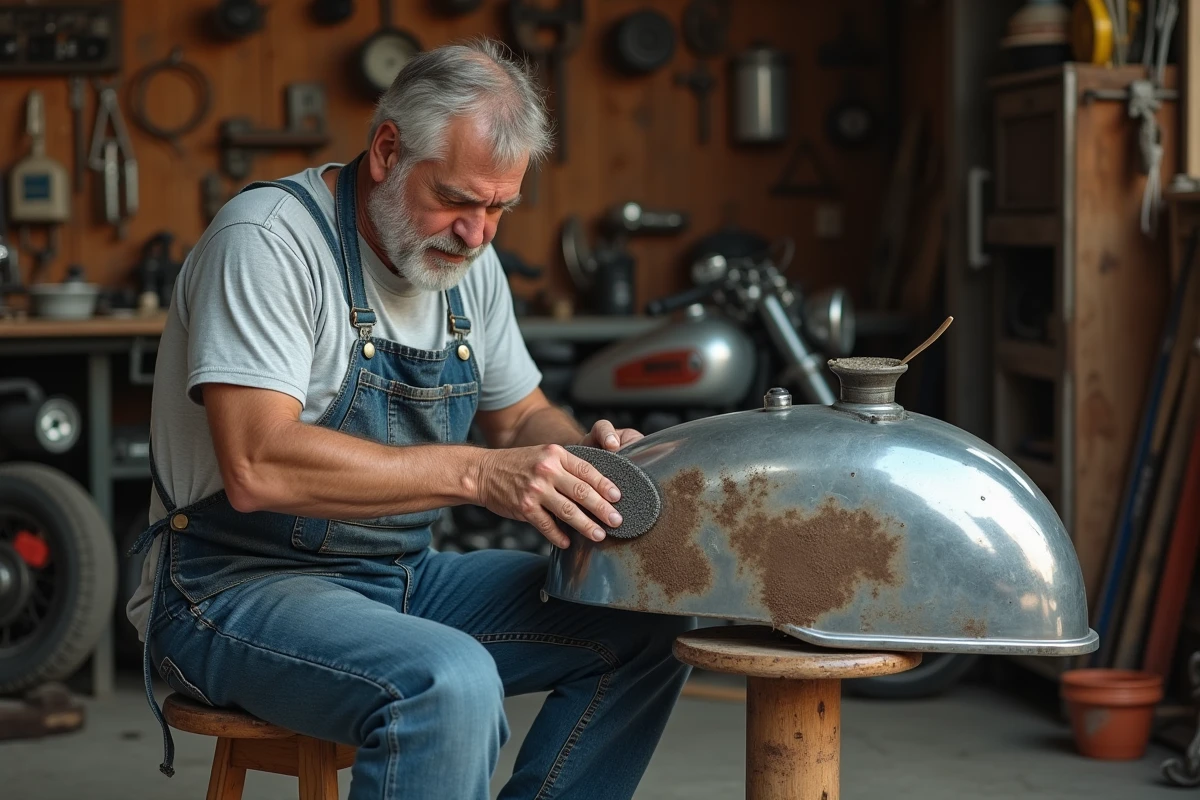
A vintage bike fender speckled with orange spots, a bathroom faucet turning brown under the collar, an old car bumper mottled after a winter on salted roads: rust on chrome always settles where you least expect it. Chrome plating forms a thin protective layer, and as soon as a micro-crack appears, moisture reaches the base metal.
Removing rust from your chrome items requires choosing the right technique based on the condition of the surface, or you risk worsening the damage.
Rust on chrome: why aluminum foil works better than steel wool
It is often recommended to use fine steel wool to scrub rust stains. On chrome, it’s a risky bet. Steel wool, even extra-fine (grade 0000), leaves micro-scratches in the chrome plating. These scratches become entry points for moisture, and rust returns more quickly.
Crumbled aluminum foil, dipped in water, produces a significantly better result. The chemical reaction between aluminum and iron oxide (rust) forms alumina, a gray paste that acts as an ultra-soft abrasive. Aluminum attacks rust without scratching the chrome. You scrub with light circular motions, rinse with clear water, and dry immediately with a clean cloth.
For stubborn stains, you can soak the aluminum in white vinegar instead of water. The acidity of the vinegar accelerates the dissolution of iron oxide. Several articles detail these methods for removing rust from chrome with variations suited to each situation.
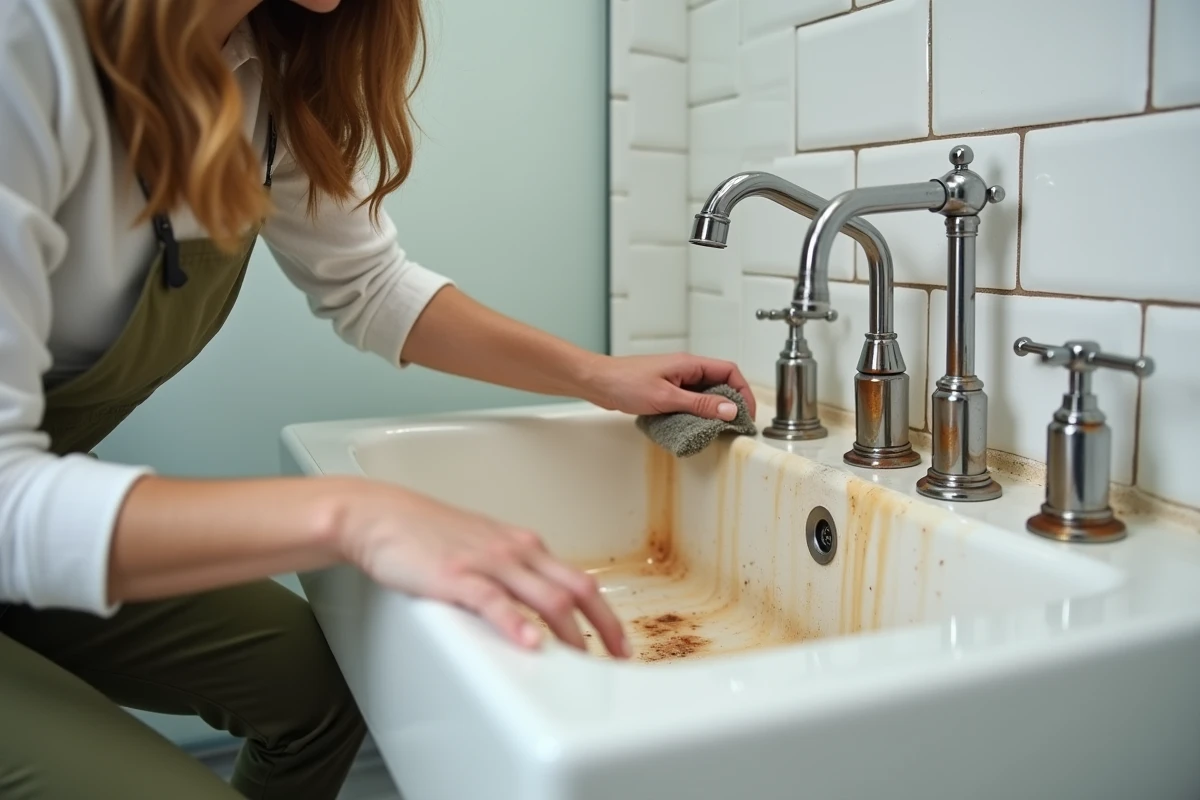
White vinegar, lemon, and baking soda: which acid for which level of rust
Not all acidic products are created equal. The choice depends on the depth of the corrosion and the fragility of the piece.
Light surface rust
Lemon juice is sufficient for recent stains. Squeeze half a lemon directly onto the affected area, let it sit for a few minutes, then scrub with a soft cloth. Lemon has the advantage of not emitting a strong odor and not attacking the chrome if the application time remains short.
Established rust stains
White vinegar is more aggressive than lemon. Soak a cloth, apply it to the rusted chrome surface, and let it sit for about ten minutes. Then scrub with a circular motion. Rinse thoroughly with water after each acidic application, as any vinegar residue left on the chrome can dull the surface.
Thick crusts and deep pitting
Baking soda mixed with a little water forms a slightly abrasive paste. Apply it to the most affected areas with a cloth or an old soft-bristled toothbrush. This paste does not chemically dissolve rust; it mechanically lifts it. You can combine both approaches: first use vinegar to soften, then use baking soda to scrub.
- Lemon: recent surface rust, fragile decorative pieces (faucets, bathroom accessories)
- White vinegar: established stains on solid pieces (bumpers, rims, bike handlebars)
- Baking soda paste: thick crusts requiring a light mechanical abrasive
Chrome parts on vehicles: the trap of high-pressure washing
People think they are doing the right thing by pressure washing their car after driving on salted roads in winter. Documented feedback in specialized automotive press over the past few years shows the opposite for chrome elements. Window trims, logos, and decorative grilles show rust pitting more quickly when frequently exposed to high-pressure jets.
The explanation is mechanical: the high-pressure jet opens micro-cracks in the chrome plating, and de-icing salts infiltrate. Once trapped under the chrome layer, the salt causes corrosion from the inside out, which is much more difficult to treat than surface rust.
The concrete recommendation is simple: avoid pointing the jet less than thirty centimeters from chrome parts, and always rinse with clear water (low pressure) after driving on salted roads. Dry each chrome part after washing with a microfiber cloth to leave no trace of moisture.
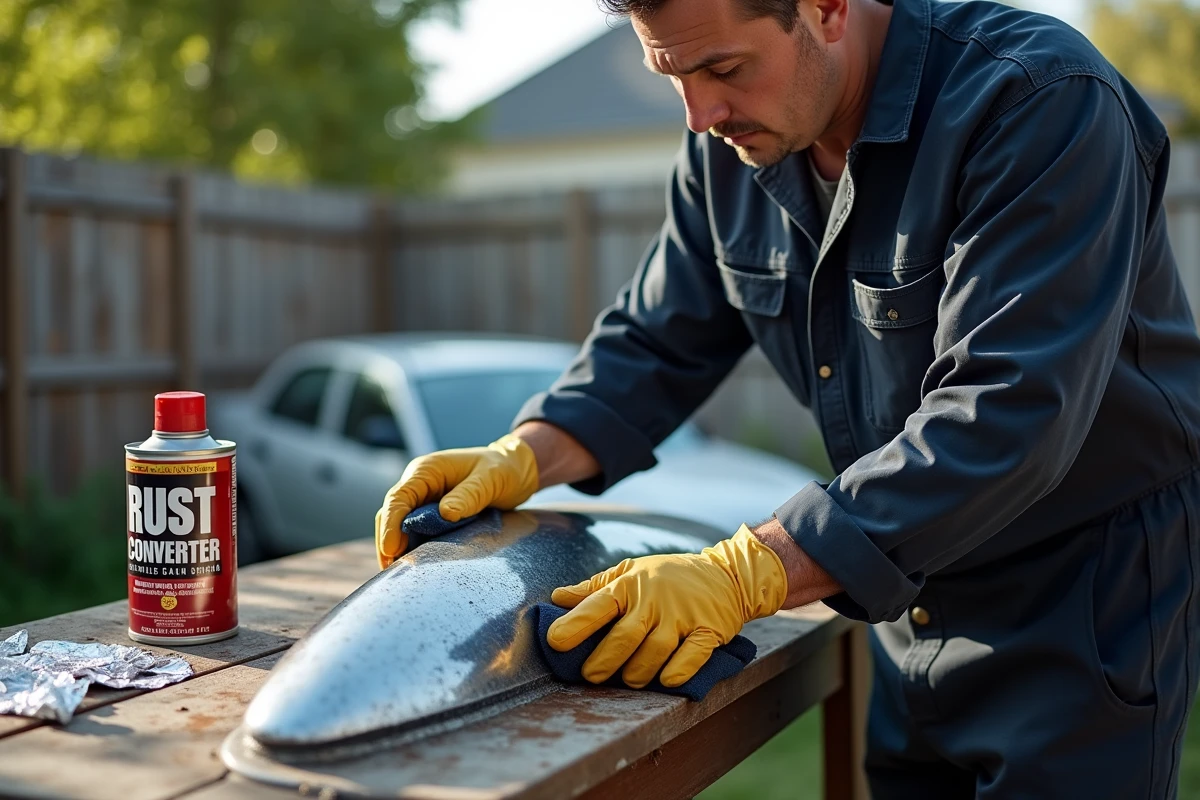
Rechroming and trivalent chrome: what changes for repair
When rust has penetrated deeply into the chrome plating, no home remedy restores the protective layer. The piece needs to be rechromed. Feedback varies on this point depending on workshops and regions, but the rechroming market is undergoing a regulatory shift that directly affects individuals.
The European Union is increasingly restricting the use of hexavalent chrome (Cr(VI)) in chrome plating baths, through the REACH regulation with recently updated restrictions. This compound, historically used to achieve a mirror finish, is classified as carcinogenic. Many workshops are closing or migrating to processes using trivalent chrome, which are less toxic but produce a slightly different appearance (more satin finish).
For a daily object (faucet, kitchen accessory), the visual difference remains minimal. For the restoration of a classic vehicle where the original shine matters, one must seek workshops that still have authorization for hexavalent chrome, which is becoming increasingly rare and expensive.
Protecting chrome after rust cleaning
Removing rust without subsequently protecting the surface means starting the work over a few months later. Once the piece is cleaned, rinsed, and dried, apply a thin layer of protective wax (automotive body wax or microcrystalline wax).
- Apply the wax in a thin layer with a soft cloth, let it dry for a few minutes, then buff
- Repeat the process every two to three months for parts exposed to the elements
- Store chrome items in a dry environment, away from stagnant moisture
The wax fills the micro-cracks in the chrome plating and prevents water from penetrating. On a bike stored in a damp garage or a bumper exposed all year round, this step makes the difference between cleaning once a year and cleaning once a month. Chrome does not rust itself; it is the metal underneath that oxidizes. As long as the barrier remains intact, rust does not return.