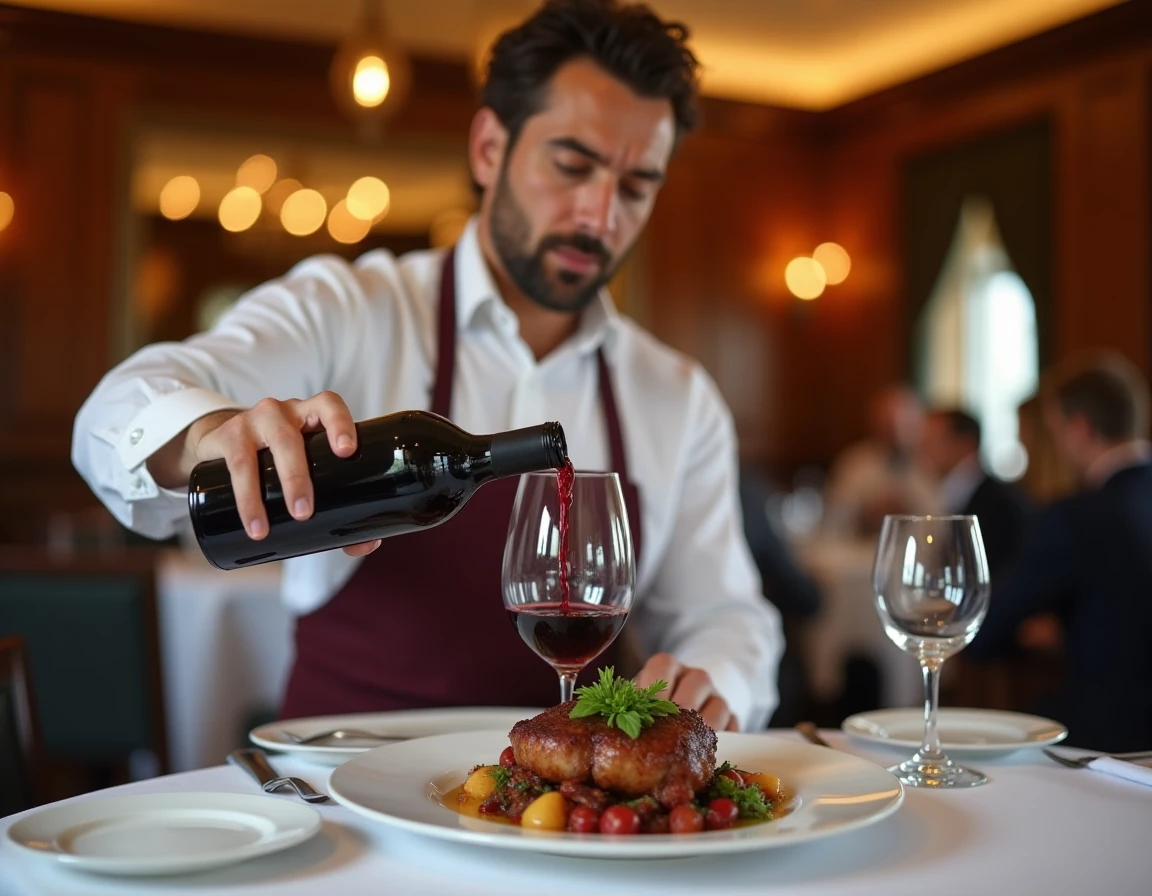
We’ve all experienced that moment when we uncork a bottle at random in front of a roast capon, hoping it works out. Sometimes it’s a success, often it’s a missed rendezvous between the dish and the glass. The pairing of food and wine during a festive meal doesn’t rely on luck, but on a few concrete reflexes that change the game right from the aperitif.
Serving Temperature and Wine Order: The Trap of the Festive Meal
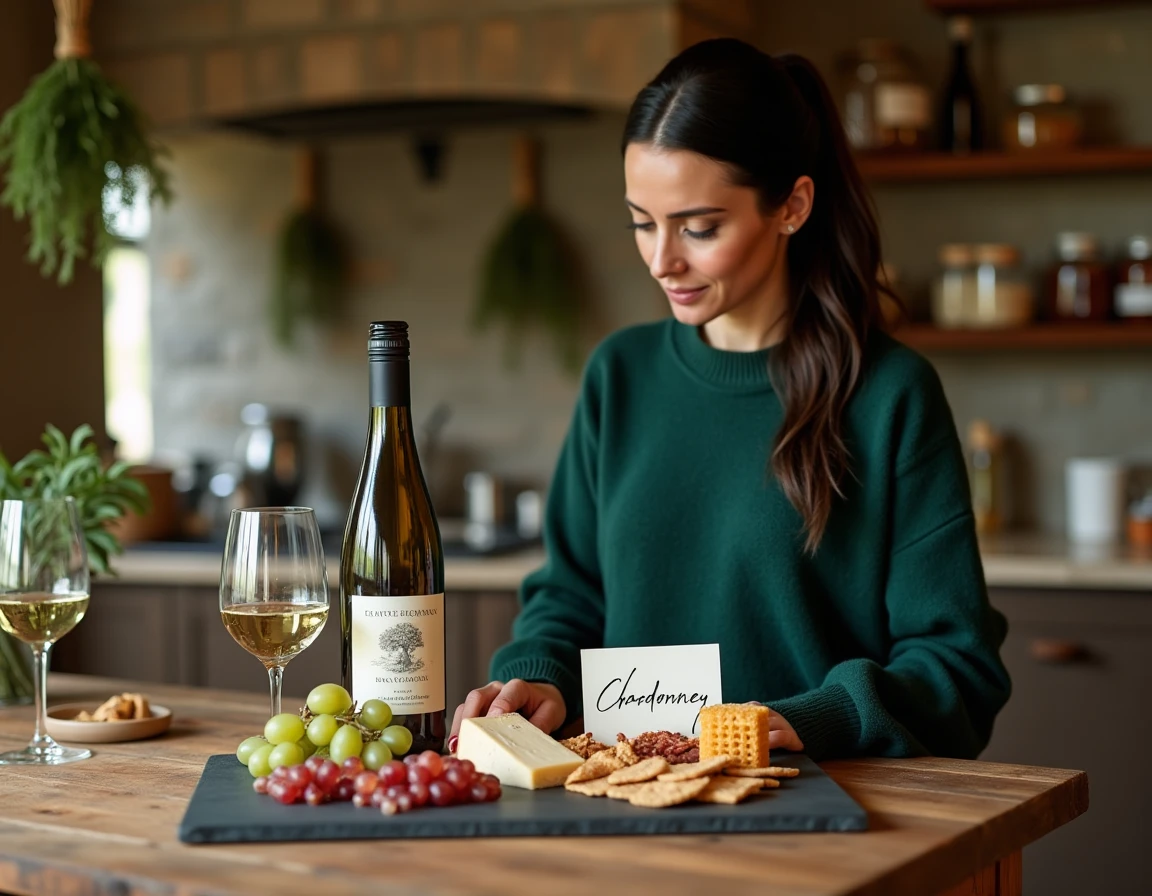
Before even choosing a wine appellation, we stumble upon a practical issue that classic guides tend to overlook: the logistics of serving. A festive meal lasts several hours, with four to six courses. The order in which wines are served conditions the entire experience. A tannic red opened too early overpowers what follows, and a white taken straight from the fridge too cold loses half its aromas.
The operational rule is simple: we build in intensity. Bubbles or dry white for the aperitif, a richer white for the starter, a light red followed by a full-bodied red for the meats, and a sweet or semi-dry sparkling wine for dessert. This sequencing prevents palate fatigue.
Regarding temperature, a white served at 8 °C straight from the fridge takes about fifteen minutes to express its aromas. Therefore, we take it out a little before sitting down. A Burgundy red is served cool, around 14-16 °C, not at room temperature in a living room heated to 22 °C in December. We can delve deeper into this topic and learn everything about food and wine pairing to refine each association dish by dish.
Food and Wine Pairing for a Festive Menu: Starter, Main Course, Cheese
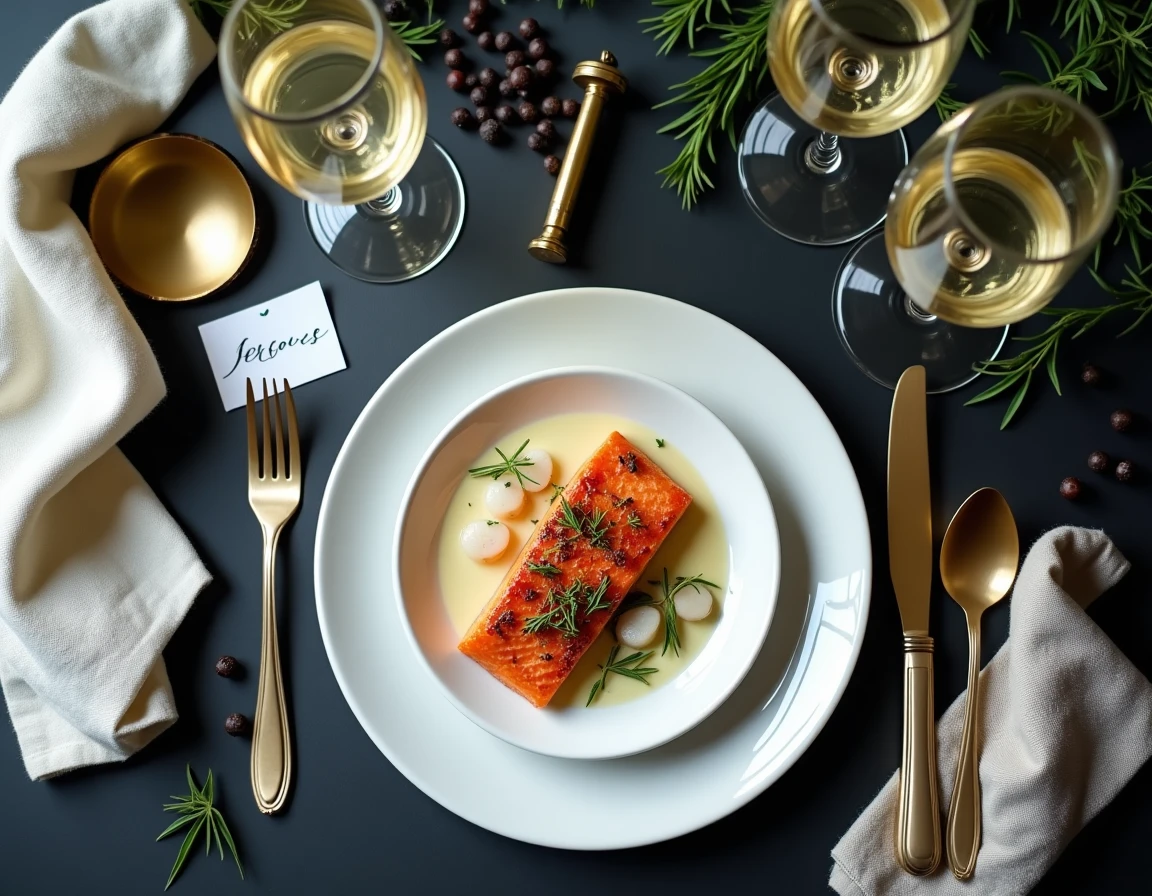
Let’s take a common festive menu: smoked salmon as a starter, roasted poultry as the main course, and a cheese platter before dessert. This triptych appears on most end-of-year tables and presents three distinct choices.
Smoked Salmon and Dry White Wine
The reflex for brut champagne works, but an Alsatian white (riesling, pinot gris) often holds up better against the fatty smokiness of the salmon. We seek a marked acidity to cut through the oily texture of the fish. A white Burgundy like Chablis also does the job thanks to its minerality.
Roasted Poultry and Choice Between Red and White
A festive poultry dish accepts both a light red and a characterful white. A capon with jus calls for a smooth red, without excessive tannins: a Burgundy pinot noir, or a Beaujolais cru like Morgon. If the poultry is stuffed or accompanied by a creamy sauce, a rich white (Meursault, Côtes du Rhône white) creates a harmonious texture pairing.
Feedback varies on this point: some guests prefer to stick with red regardless of the preparation, while others find that a full-bodied white is pleasantly surprising. The idea is to offer both if possible.
Cheese Platter: Breaking the Automatic Red
Cheese often pairs better with white wine than with red. It’s counterintuitive, but the tannins in red conflict with the fat in cheese and produce an unpleasant bitterness. Aged comté pairs remarkably with a yellow wine from Jura or a savagnin. Fresh goat cheese calls for a Loire sauvignon blanc. Only blue cheeses (roquefort, bleu d’Auvergne) stand up to a sweet wine like Sauternes.
- Soft cheeses (brie, camembert): fruity white, like unwooded chardonnay, or brut cider to stay in a Norman register.
- Cooked pressed cheeses (comté, beaufort): Jura white, or a very light red like Irouléguy.
- Blue cheeses (roquefort, fourme): sweet wine from the Southwest, tawny port, or a late harvest gewurztraminer from Alsace.
Champagne and Bubbles: When to Serve Them in a Festive Meal
Champagne is the reflex for the aperitif, but limiting it to this role underutilizes a wine of great versatility. A brut nature or extra-brut champagne can accompany seafood, a fish tartare, or even a starter based on crunchy vegetables.
A blanc de blancs champagne (100% chardonnay) can carry through almost an entire meal if the menu remains focused on seafood and white meats. However, as soon as we move to a dish of red meats or game, the bubbles lose their relevance against the power of the dish.
For dessert, we avoid brut champagne with a sweet cake: the bright acidity of brut clashes with the sugar and creates a sour sensation. A demi-sec or a sweet crémant pairs well with a Yule log or a fruit tart. A Moscato d’Asti, slightly sparkling and low in alcohol, also works with light desserts.
Festive Non-Alcoholic Pairings: An Alternative to Include in the Menu
At a festive table, there is almost always a guest who drinks little or no alcohol. In recent years, the range of non-alcoholic beverages has become structured enough to allow for true gastronomic pairings. De-alcoholized wines (sparkling or still) have improved in quality and can be found at most wine merchants.
- For the aperitif: non-alcoholic bubbles like sparkling grape juice or dry kombucha, which bring acidity and length on the palate.
- With starters: unfiltered farm apple juice correctly replaces a dry white with salmon.
- With dessert: cold-brewed green tea, served in a carafe, creates an original pairing with chocolate desserts thanks to its gentle bitterness.
Offering a non-alcoholic option at the table is no longer a compensatory gesture; it’s a real taste choice. The trend towards moderation during the holidays is confirmed each year, notably driven by movements like Dry January, and wine merchants now offer dedicated selections.
Ultimately, the food and wine pairing during a festive meal comes down to three decisions made in advance: the sequencing of bottles, the serving temperature, and the courage to break free from automatic pairings (white with cheese, bubbles beyond the aperitif). It’s better to serve three well-chosen wines than six bottles opened haphazardly.